
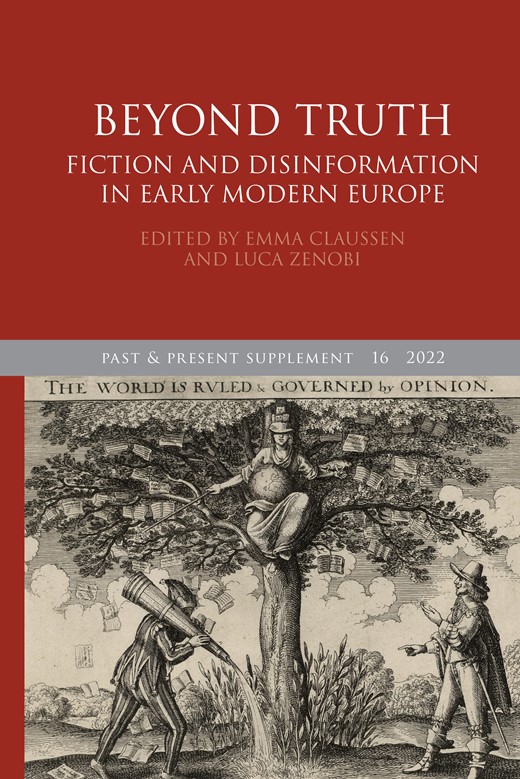
Inventing Free Speech: Politics, Liberty and Print in Eighteenth-Century England*
Our modern concept of political free speech as an individual political right was first elaborated in detail three hundred years ago by two London journalists, Thomas Gordon and John Trenchard, in their best-selling, endlessly reprinted, anonymous newspaper column, known as ‘Cato’s Letters’ (1720–23). As is well known, Cato’s novel ideas about speech and press freedom proved hugely influential, especially in the American colonies. Because they underpin the peculiar formulation of the First Amendment of the United States’ constitution, their impact is still with us today. But Trenchard and Gordon’s own lives and motives are remarkably obscure, and how they managed to formulate a completely new way of thinking about politics and public debate has remained an unexplored puzzle. Nor has it previously been appreciated that their arguments, as well as refocusing existing discussions of press liberty, directly engaged long-standing concerns about false news and public deception. Drawing on newly discovered printed and manuscript evidence, this essay reveals the deliberately misleading character of their ideology, and the reasons for its hidden partiality. It shows both how political freedom of speech first came to be systematically conceived of as a mechanism for truth, an antidote to falsehood, and the foundation of all liberty — and that, ironically, this new and powerful theory was itself but a partial, biased fiction about the world. That is a paradox whose consequences we are still living with.
Obuna bo'lish uchun tizimga kiring
Nashrning boshqa sonlari